 EN

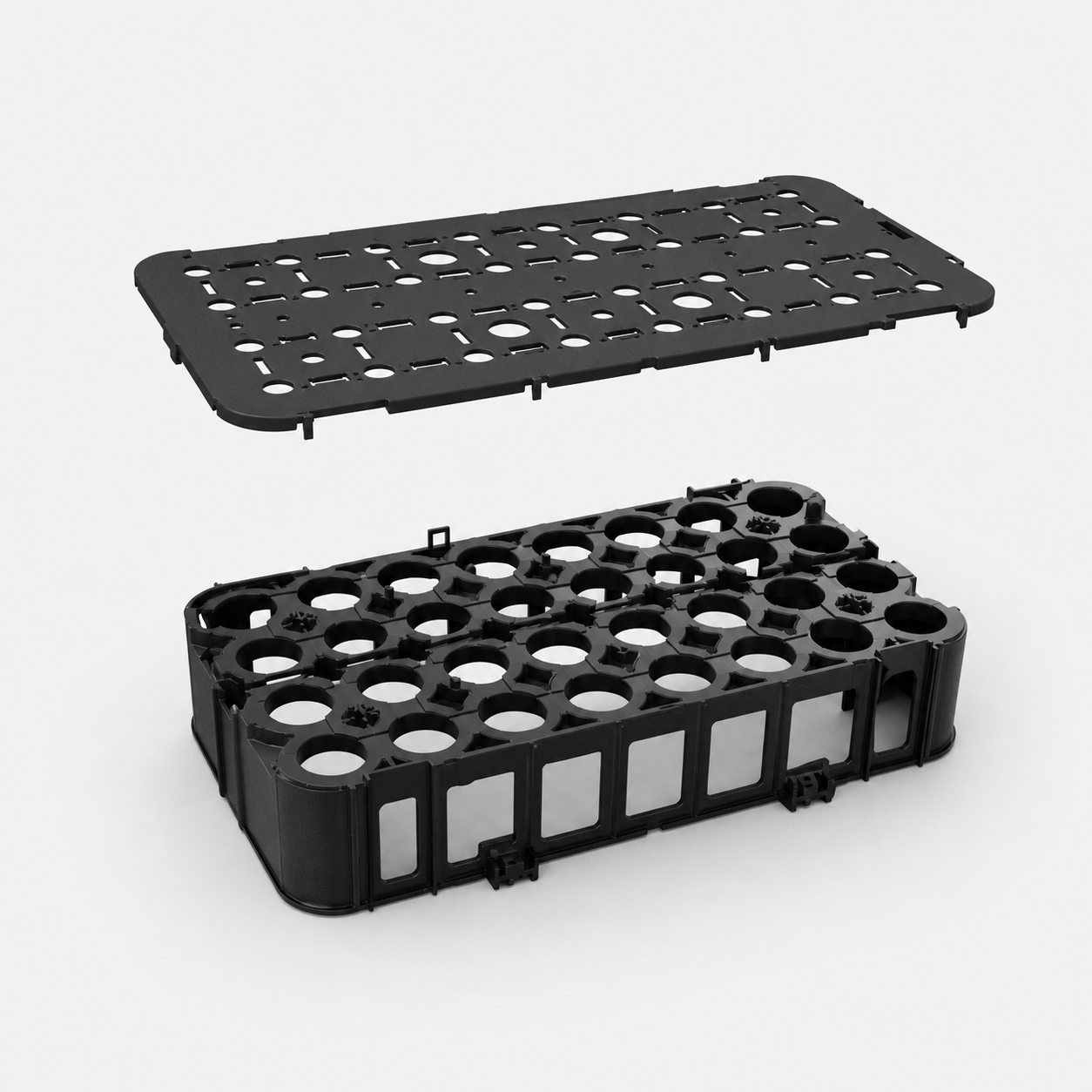
Construction and Infrastructure: Lightweight Structural Components
High-Stiffness Enclosures for Traffic Control Systems
Structural foam injection molding produces enclosures with a dense outer skin and cellular core—delivering stiffness-to-weight ratios up to three times greater than solid plastic parts of equivalent mass (Plastics Technology, 2022). This makes them ideal for traffic control cabinets, signal controller boxes, and roadside communication housings, which must endure frequent impact, vibration, and wide temperature fluctuations without cracking. Complex features—including integrated hinges, cable entry points, and mounting bosses—are molded directly into the part, reducing component count by 30–50% and cutting assembly time. Weather-resistant grades of glass-filled polypropylene and nylon resist salt spray, UV degradation, and moisture, achieving NEMA 4X and IP66 ratings. Field data from municipal installations show that switching to structural foam enclosures reduced cabinet failures by 28% over five years while lowering replacement costs by $600 per unit. With wall thicknesses optimized for stress zones, these housings weigh 25% less than aluminum equivalents—simplifying installation, transport, and crane handling.
Modular Building Panels with Integrated Insulation and Load-Bearing Capacity
Structural foam injection molding enables large-format building panels—up to 3 meters long—that unify load-bearing structure and thermal insulation in a single component. Internal ribbing distributes compressive loads, enabling support of up to 50 psf while delivering an R-value of 4 per inch (2022 testing data). The closed-cell foam core acts as a continuous thermal break, eliminating the need for separate batt or board insulation. Tongue-and-groove interlocking features are molded directly into panel edges, allowing snap-together assembly without metal fasteners—reducing on-site labor by ~40% and minimizing thermal bridging. Using recycled polypropylene or PC/ABS blends, a leading manufacturer achieved a 60% reduction in embodied carbon versus precast concrete panels of comparable size. Their lightweight nature reduces foundation demands and crane capacity requirements, making them especially well suited for multi-story modular housing, cold storage facilities, and rapid-deployment shelters.
Material Handling and Agricultural Equipment: Durable, Cost-Effective Solutions
Large-Scale Structural Foam Pallets and Harvest Bins
Structural foam injection molding yields pallets and harvest bins that are up to 30% lighter than solid plastic alternatives—yet retain exceptional impact resistance and bending stiffness. The foam core, formed in situ via chemical blowing agents, cuts raw material use without sacrificing load-bearing performance. Single-piece construction eliminates joints and weld lines found in assembled alternatives, resulting in containers that withstand repeated forklift impacts and rough field handling—cutting replacement costs by up to 50% over a five-year service life. In cold-storage logistics, the insulating properties of the foam core help stabilize internal temperatures, protecting perishable crops during transit. Non-porous, smooth surfaces simplify cleaning and reduce cross-contamination risks in multi-crop operations. Nesting and stacking capability further lowers return-shipping expenses—making these pallets a scalable, cost-effective solution for high-volume agri-logistics.
Sustainable Farm Equipment Housings Using Recycled PP Structural Foam
Housings for seeders, irrigation controllers, and compact tractors increasingly leverage structural foam molded from blended recycled polypropylene (PP)—combining post-industrial and post-consumer regrind with virgin resin. This approach lowers embodied carbon by up to 40% compared to all-virgin counterparts while fully meeting mechanical, chemical, and environmental performance requirements. The structural foam process itself reduces melt temperature and energy consumption during molding, reinforcing farm-level sustainability goals. These housings offer strong resistance to fertilizers and diesel, proven UV stability for all-weather exposure, and acoustic dampening that mitigates engine noise. Integral ribs, mounting bosses, and alignment features eliminate secondary fastening—speeding assembly and reducing parts count. Because the material remains recyclable at end of life, equipment built with recycled PP structural foam supports circular economy frameworks—helping agricultural operations meet tightening environmental regulations without compromising durability or functionality.
Telecommunications Enclosures: Precision, Protection, and Integration
EMI-Shielded and Thermally Stable Structural Foam Housings
Telecom enclosures demand reliable electromagnetic interference (EMI) shielding and precise thermal management. Structural foam injection molding delivers lightweight housings with a dense, conductive outer skin and low-conductivity cellular core—reducing weight by up to 30% versus solid alternatives. Conductive fillers such as carbon fiber are compounded directly into the polymer matrix, enabling the skin to achieve >40 dB EMI attenuation across a broad frequency range, compliant with MIL-STD-461G. The rigid core maintains dimensional stability under load, while the skin provides a durable, finish-ready surface. Integrated cooling fins and the core’s inherent thermal resistance enhance heat dissipation and limit heat transfer—critical given that over 55% of electronic component failures stem from thermal stress (U.S. Air Force Avionics Integrity Program). The result is a fully integrated, lightweight enclosure engineered for reliability in exposed telecom deployments.
Design-for-Assembly Benefits in Single-Shot Structural Foam Molding
Single-shot structural foam molding consolidates telecom enclosure functionality into one molded part: snap-fits, wire management channels, mounting bosses, and alignment features are all formed in-process. This eliminates brackets, secondary fasteners, and post-machining steps—slashing part counts and reducing build time by up to 50%. Dimensional consistency ensures precise fit and function, while molded-in EMI shielding and surface finish remove the need for coatings or plating. Early application of design-for-assembly principles minimizes failure points and simplifies inventory: a single SKU replaces entire multi-component kits. The enclosure exits the mold ready for electronics installation—accelerating time-to-deployment and lowering total cost of ownership.
FAQ Section:
- What is structural foam injection molding? Structural foam injection molding is a manufacturing process that creates lightweight, durable components with a dense outer skin and cellular inner core, providing a high stiffness-to-weight ratio.
- What are the benefits of structural foam compared to solid plastic? Structural foam offers improved strength-to-weight ratios, reduced raw material use, and integrated design features, lowering production and installation costs.
- Can recycled materials be used in structural foam injection molding? Yes, recycled materials like post-consumer and post-industrial polypropylene can be blended with virgin resin to produce eco-friendly, high-performance components.
- How does structural foam improve thermal management in telecom enclosures? Structural foam includes an insulating core and can integrate features like cooling fins, enhancing thermal stability and reducing heat transfer.
- What are the typical applications of structural foam components? Structural foam is used for traffic control systems, modular building panels, agricultural equipment, material handling pallets, and telecommunications enclosures.