 EN

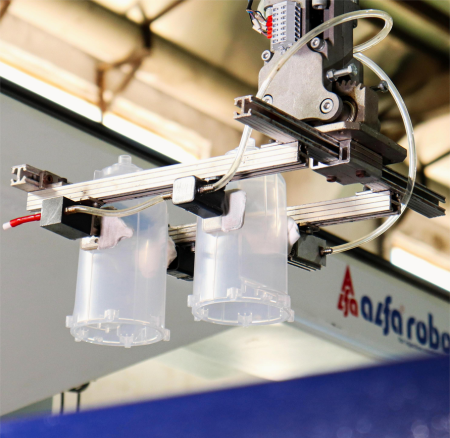
Improved Process Efficiency in Plastic Injection Moulding
Reduced Cycle Time by Eliminating Cold Runner Solidification
In plastic injection moulding, cycle time is typically governed by the thickest section requiring full solidification before ejection—often the cold runner itself, whose diameter can equal or exceed part wall thickness. Hot runner systems eliminate this bottleneck by maintaining the melt channel at processing temperature between shots, removing the need to cool, eject, and re-melt a solid runner each cycle. Cooling time then depends solely on part geometry. Operators can shorten holding and cooling phases, accelerate screw recovery, and open the mould earlier—without drool or stringing from a partially solidified runner.
Replacing a thick cold runner with a valve-gated hot runner typically reduces cycle time by 20% to 35% for thin-wall packaging and medical components (industry benchmark data, 2022). Savings increase when cold runner weight exceeds shot weight, as energy and time previously spent plasticizing scrap are fully eliminated. For example, a 2-second reduction per shot on a 4-cavity tool running 500,000 shots annually frees approximately 270 press hours—enabling faster order turnaround without capital investment in additional machines.
Enhanced Multi-Cavity Performance and Filling Uniformity
Cold runner multi-cavity tools frequently suffer from unbalanced filling: cavities near the sprue fill first under higher pressure, while end cavities experience lower pressure and risk short shots or inconsistent packing. Hot runner systems resolve this through heated manifolds with individually controlled drops—equalising flow length and pressure drop across all cavities. The result is consistent fill speed, packing pressure, and cooling time.
In a 16-cavity thin-wall cap trial, cavity weight variation dropped from ±0.65% with a cold runner to ±0.12% after hot runner conversion (processing trial data, 2023). This improved uniformity reduces internal stress, sink marks, and dimensional spread—supporting tighter tolerances and lower reject rates in closures, connectors, and diagnostic devices. Sequential valve gating further enhances control by opening gates in a programmed sequence, optimising weld line placement and venting. With lower and more predictable nozzle-to-gate pressure drop, tools often require less injection pressure and clamp force—boosting repeatability in high-cavitation applications where minor variations compound into higher scrap and slower mould qualification.
Minimal Gate Vestige and Enhanced Surface Finish
Hot runner systems deliver molten plastic directly through heated channels to the gate, eliminating the large, cold sprue and runner remnants inherent to cold runner moulds. In multi-cavity tools, only a small, precisely controlled gate mark remains—often under 0.1 mm high. Valve gate designs reduce this further by mechanically closing at the cavity surface, leaving either a faint witness line or no visible mark. This minimal vestige improves visual appearance and cuts post-mould trimming needs by up to 30% in high-volume production (industry survey, 2023).
For consumer-facing parts—including caps, cosmetic packaging, and medical housings—surface finish is a key acceptance criterion. Because hot runners prevent cold slug formation, melt enters the cavity at consistent velocity and pressure, reducing flow lines, sink marks, and weld line visibility. The resulting smoother, more uniform surface meets strict aesthetic standards without secondary polishing or coating—and better supports decorative finishes, textures, and tight cosmetic specifications.
Stable Melt Temperature Control for Repeatable Plastic Injection Moulding
Hot runner manifolds use individually controlled heating zones and thermocouples to maintain melt temperature within ±1°C from nozzle tip to gate (industry benchmark, 2023). This thermal stability prevents premature cooling and viscosity shifts that cause short shots, dimensional drift, and surface defects. Cold runner systems, by contrast, lose heat as polymer travels through unheated channels—making fill behaviour sensitive to ambient fluctuations and cycle interruptions. Even brief temperature swings of 2–3°C can alter viscosity and part dimensions, underscoring the need for closed-loop thermal control.
With hot runners, every shot experiences identical melt temperature—yielding highly repeatable cavity pressure curves and part weights. Shot-to-shot weight variation can fall below 0.05% in well-tuned systems (2023 process capability data), supporting tighter dimensional tolerances and reducing in-process adjustments. For regulated sectors like medical, automotive, and electronics, this stability strengthens quality data, lowers scrap, and improves process capability indices (Cp/Cpk).
Cost Savings and Sustainability Benefits
In plastic injection moulding, hot runner systems reduce both material consumption and recurring scrap—delivering direct cost savings and measurable environmental benefits.
Material Waste Reduction and Lower Scrap Rates
Hot runner manifolds keep the melt channel molten after each shot, eliminating the solidified sprue and runner that must be ejected, regrinded, or discarded in cold runner setups. This removes waste at the source. Multi-cavity operations commonly report 30–50% material savings versus cold runner layouts (2023 industry benchmark). Minimal gate vestige further reduces trimming and secondary finishing requirements. Colour or material changeovers become faster, with less purging and fewer off-spec parts. Avoiding regrind also lowers contamination risk and batch-to-batch variability—resulting in a leaner process with lower scrap rates, less handling, and higher usable output per kilogram of resin purchased.
Energy Efficiency Compared to Cold Runner Systems
While hot runner systems consume additional energy to maintain manifold temperature, they eliminate the repeated melting, regrinding, and reprocessing of cold runner scrap. Removing this secondary material loop typically reduces overall energy use per finished part. Faster cycles also decrease machine runtime and associated power draw. Eliminating regrind lines further cuts auxiliary equipment runtime and material handling energy. The net effect is lower energy intensity—particularly pronounced in high-volume production, where cold runner waste would otherwise scale linearly with output.
FAQ
What is the primary benefit of using hot runner systems in plastic injection moulding?
The primary benefit is improved cycle efficiency. Hot runner systems eliminate the need for cooling, ejecting, and re-melting cold runners, which significantly reduces cycle time and allows faster machine operations.
How do hot runner systems enhance part quality in multi-cavity moulds?
Hot runner systems ensure uniform filling of all cavities through heated manifolds with individually controlled drops. This consistency reduces part defects like sink marks, short shots, and dimensional variations.
Do hot runner systems reduce industrial waste?
Yes, hot runner systems eliminate solidified sprue and runner waste, reducing scrap rates by 30–50%. They also reduce trimming needs and contamination risks associated with regrind material.
Is using a hot runner system more energy efficient than a cold runner setup?
Yes, despite the energy required to maintain manifold temperatures, hot runner systems remove the need for regrinding and processing cold runner scrap, leading to lower overall energy consumption per part, especially in high-volume production.
Can hot runner systems improve surface finish and aesthetics?
Absolutely. By preventing cold slug formation and delivering molten plastic consistently to the cavity, hot runner systems reduce flow lines and weld line visibility, ensuring smoother and more visually appealing surfaces.
Table of Contents
- Improved Process Efficiency in Plastic Injection Moulding
- Cost Savings and Sustainability Benefits
-
FAQ
- What is the primary benefit of using hot runner systems in plastic injection moulding?
- How do hot runner systems enhance part quality in multi-cavity moulds?
- Do hot runner systems reduce industrial waste?
- Is using a hot runner system more energy efficient than a cold runner setup?
- Can hot runner systems improve surface finish and aesthetics?