 EN
EN

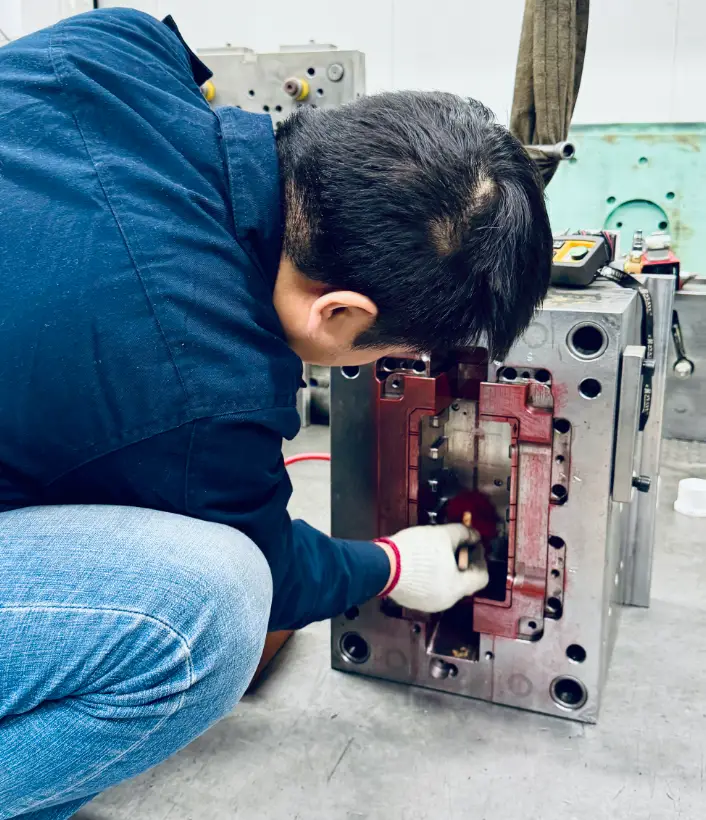
Daily and Weekly Injection Mold Maintenance Essentials
Surface Cleaning and Resin Deposit Removal
Getting rid of plastic residue on a daily basis really matters if we want to avoid problems like flash formation, dimensional issues, and corrosion down the line. When it comes to cleaning agents, compatibility is key. For example, isopropyl alcohol works well with polypropylene parts while acetone free options should be used for ABS components. And remember to go easy on the surface with non abrasive tools during the process. The areas that need extra attention include vents, runners and those tricky core pins since these spots tend to collect residue much faster than others. Automated cleaning equipment does cut down work hours significantly around 35% less than doing everything manually according to industry stats, but don't forget to check cavity condition after cleaning just to be safe. Safety first folks! Always wear chemical resistant gloves and face protection whenever working with any kind of solvent solution.
Lubrication of Moving Components and Ejection Systems
Wear-prone parts need regular lubrication with specific products for best results. Mold release agents work well on cores and cavities, high temp grease should go on slides and guide pins, and ejector pins benefit from silicone free oil to avoid sticking issues. Not enough lubricant leads to faster wear and tear, which can cut down how long molds last before needing replacement. Too much product creates problems too, like contaminating finished parts. Stick to the manufacturer marked spots when applying these substances, and remember less is usually better. A little goes a long way in maintaining proper function without creating new headaches down the line.
Visual Inspection for Early Wear, Corrosion, or Flashing
Conduct structured inspections after every 50 production cycles using 10ƒ magnifiers and borescopes:
| Inspection Focus | Critical Signs | Action Required |
|---|---|---|
| Ejector system | Bent pins, scoring marks | Pin replacement |
| Cooling channels | Mineral deposits, flow reduction | Chemical flushing |
| Parting lines | Flash, burrs >0.1mm | Clamping pressure adjustment |
Document all findings in a centralized maintenance log to identify degradation trends and enable predictive component replacement.
Scheduled Preventive Maintenance for Injection Mold Longevity
Quarterly Alignment Checks and Cavity Integrity Testing
Checking the alignment between cores and cavities every three months with precision measuring tools is essential for keeping things running smoothly. We need to stay within that tight ±0.05 mm range for parallelism. When we catch misalignments early, it stops those annoying issues where parts wear unevenly and ends up costing thousands in repairs later on. Combine regular checks with dye penetrant tests on each cavity surface too. This helps spot those tiny cracks beneath the surface that nobody can see with just their eyes. Industry data suggests this combination approach catches potential problems before they get worse, cutting down unexpected machine shutdowns by around 40% according to most recent studies. Keeping track of past measurements over time gives us valuable insights into how components degrade, allowing better planning for when maintenance actually needs to happen instead of guessing.
Biannual Coolant System Flushing and Thermal Sensor Calibration
It's important to flush those coolant channels at least every half year to get rid of mineral scale buildup and biofilms that can really cut down on heat transfer efficiency somewhere between 15% to even 30%. For best results, go with pressurized backflushing using proper descaling agents first, then follow up with some pH neutral rinse solutions to keep corrosion from happening. While doing this maintenance work, don't forget to check and calibrate all thermal sensors against certified reference equipment. Any sensor reading that drifts more than plus or minus 2 degrees Celsius should be swapped out immediately. Keeping good thermal control helps avoid part warping issues and maintains consistent cycle times across production runs. Also worth considering are inline flow meters installed to monitor coolant speed, making sure it stays around the sweet spot of 1.5 to 2.5 meters per second for maximum heat removal effectiveness.
Material-Specific Strategies to Extend Injection Mold Life
Mitigating Abrasive Polymer Wear (e.g., GF-PP, PBT) with Hardened Steel and Coating Solutions
Working with abrasive materials such as glass filled polypropylene or PBT tends to cut down mold lifespan significantly compared to regular plastics because these substances cause faster wear and tear across critical areas like gates, runners, and ejection points. For molds handling these challenging materials, it makes sense to go with tougher steel options like H13 or D2 grades that have at least 50 HRC hardness according to Rockwell scale measurements. These harder steels stand up better against the constant grinding action. To get even more protection from abrasion, consider applying special surface treatments. Titanium nitride coating works well on ejection mechanisms and core components since it prevents tiny particles from getting stuck in moving parts. Another good choice is diamond like carbon coating which helps reduce friction problems in those tricky thin wall sections where parts slide together during operation. Studies indicate this kind of treatment can cut down wear issues by around 30 percent in areas subjected to intense shearing forces.
| Material Solution | Key Benefit | Ideal Use Case |
|---|---|---|
| H13/D2 Tool Steel | Core structural integrity | High-volume GF resin production |
| TiN Coating | Prevents particle embedding | Ejection systems & cores |
| DLC Coating | Reduces friction coefficient | Thin-wall sections & slides |
Pair material upgrades with optimized processing: limit injection speed to â„70% capacity and refine gate geometry to minimize fiber orientation-induced abrasion. Conduct profilometer measurements of critical surfaces every 50,000 cycles to schedule recoating before dimensional tolerances are compromised.
FAQ
What are the key tools required for injection mold maintenance?
Some essential tools for injection mold maintenance include non-abrasive cleaning tools, chemical-resistant gloves, face protection gear, magnifiers, borescopes, and precision measuring tools.
How often should coolant system flushing be performed?
Coolant system flushing should be performed biannually to remove mineral scale buildup and biofilms.
What specific materials are recommended for molds handling abrasive polymers?
For molds handling abrasive polymers, it is recommended to use tougher steel options like H13 or D2 grades, and coatings like Titanium Nitride (TiN) or Diamond-Like Carbon (DLC) for enhanced protection.