 EN
EN

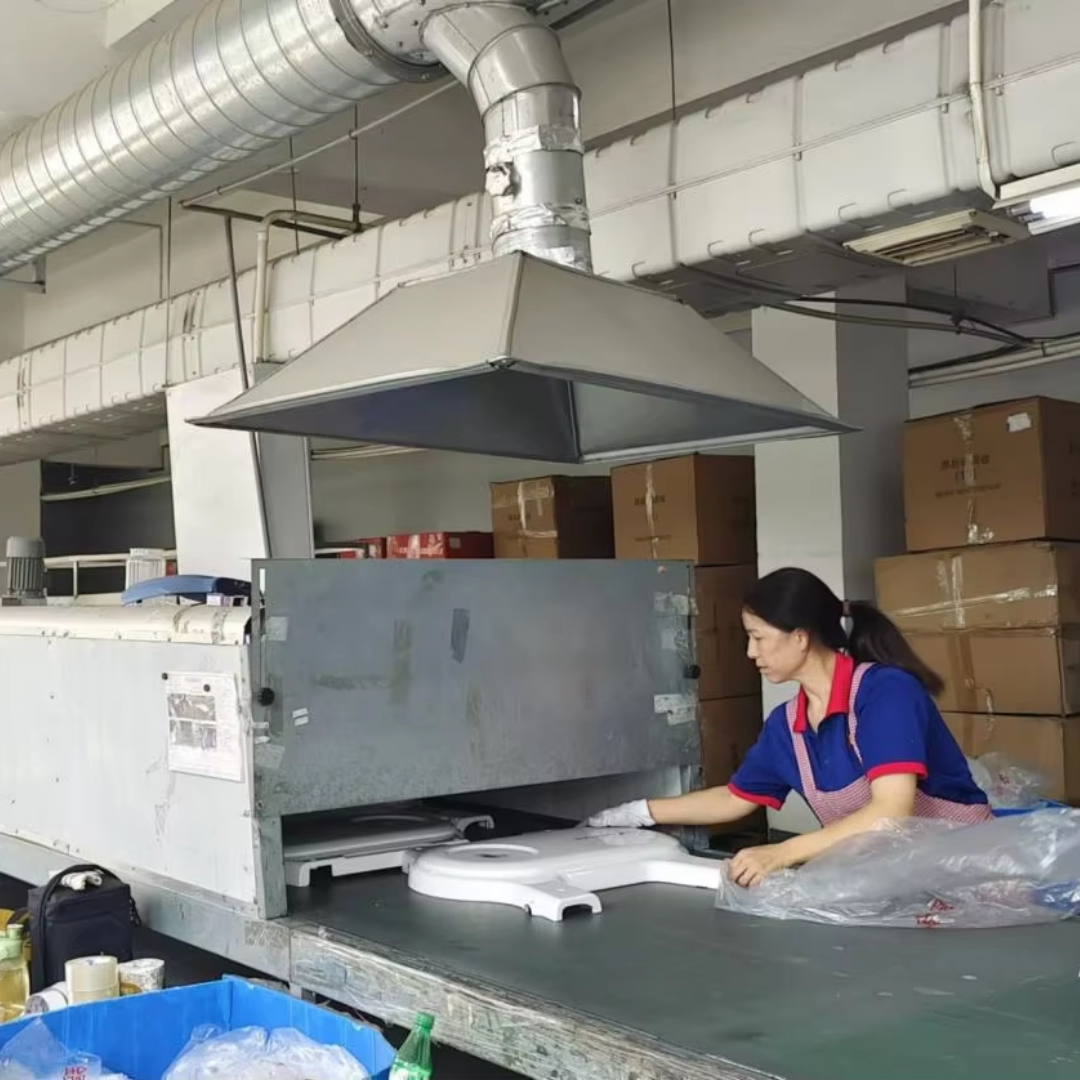
The Critical Role of Process Control in High-Precision Injection Molding
Process control serves as the backbone of high-precision injection molding. Even minor fluctuations in temperature, pressure, or injection speed can cause dimensional deviations exceeding acceptable tolerances. Without rigorous control, consistency across production runs becomes unattainable—driving scrap, rework, and cost overruns. Modern manufacturing relies on real-time monitoring and automated adjustments to maintain stable conditions—not just inspecting parts after production, but preventing defects by actively managing every variable during the cycle. A sudden drop in melt temperature, for example, alters polymer viscosity and may cause incomplete cavity fill or sink marks; excessive injection pressure risks flash or mold damage. Tolerances as tight as ±0.001 inch are standard in medical devices and electronics, where failure is not an option. Achieving this demands closed-loop feedback systems that detect anomalies instantly and correct them before defective parts accumulate. Beyond immediate quality, disciplined process control extends tool life and reduces cycle times when parameters are scientifically optimized. Ultimately, high precision isn’t delivered by advanced machinery alone—it’s enabled only through consistent, data-driven control of every parameter from shot initiation to ejection.
Key Injection Molding Parameters That Dictate Precision
Precise injection molding hinges on masterful control of three interdependent parameters: melt temperature, injection speed, and hold pressure—each directly influencing microstructure, flow behavior, and dimensional repeatability.
Melt temperature, injection speed, and hold pressure: Their impact on microstructure and dimensional repeatability
Melt temperature governs polymer chain mobility and structural uniformity; deviations beyond ±5°F from the optimal range can induce laminar shear layers and disrupt molecular alignment. Injection speed determines flow-front stability: velocities below 0.5 in/sec often produce hesitation marks, while those exceeding 20 in/sec risk gas traps from turbulent flow. Hold pressure ensures cavity packing density and counters shrinkage during solidification—pressures below 700 psi may allow up to 1.6% volumetric shrinkage in semi-crystalline resins, whereas maintaining hold pressure at 80–90% of peak injection pressure correlates with Cpk >1.33 dimensional repeatability across 50,000 cycles. Real-time cavity pressure mapping identifies decay zones requiring dynamic compensation—enabling precise gate-seal timing and minimizing post-mold distortion.
Cavity pressure and cooling rate: Hidden drivers of warpage and residual stress
Cavity pressure and cooling rate are critical yet often under-monitored variables. Non-uniform cooling exceeding 70°F/min creates thermal gradients that generate residual stresses above 1800 psi—especially in thin sections under 0.060" thick—leading to warpage and functional failure. Abrupt temperature shifts near gates accelerate polymer morphology instability, while premature gate freeze (detected via direct cavity pressure measurement) causes under-compensation and measurable warpage—up to 0.004" per MPIF 2021 distortion models. Strategic phase-specific cooling—progressively tapering to 0.022°F/min in thicker sections—combined with synchronized cavity pressure regulation enables warpage control within ±0.015 mm/100 mm, meeting GD&T parallelogram tolerance requirements.
Advanced Control Strategies for Stable, Repeatable Injection Molding
For high-precision plastic parts—especially safety-critical components like medical implants or optical lenses—consistency demands more than manual intervention. Material viscosity shifts, ambient fluctuations, and machine wear make real-time, adaptive control non-negotiable.
Closed-loop systems with real-time sensor feedback (cavity pressure, melt temp, clamp force)
Modern closed-loop systems integrate cavity pressure transducers, infrared melt sensors, and strain gauges to autonomously adjust process parameters. When cavity pressure exceeds set thresholds—indicating overpacking—hydraulic valves modulate within 50 ms to prevent flash or warpage. Peer-reviewed studies demonstrate such systems reduce dimensional variation by 42% compared to open-loop processes, significantly improving first-pass yield and long-term repeatability.
Adaptive control architectures: PID tuning vs. model-predictive control in high-tolerance production
Traditional PID controllers react to deviations after they occur, relying on proportional-integral-derivative tuning to correct error. In contrast, model-predictive control (MPC) anticipates process drift using material-specific crystallization and rheological models. For sub-0.05 mm tolerance parts, MPC reduces standard deviation by 37% by preempting nozzle freeze-off during rapid cooling phases—delivering tighter control where reactive systems fall short.
Validating Precision: Case Study in Medical-Grade Injection Molding
A leading medical device manufacturer required syringe bodies with a dimensional tolerance of ±0.02 mm—a specification mandated by ISO 13485 and FDA 21 CFR Part 820. Initial production runs exhibited 0.05 mm warpage, exceeding the limit. By implementing closed-loop cavity pressure control and real-time melt temperature monitoring—and fine-tuning the hold pressure profile and cooling ramp—the process achieved consistent ±0.015 mm tolerance across 10,000 cycles. Validation included coordinate measuring machine (CMM) inspection and statistical process control (SPC), confirming a Cpk of 1.42. This case confirms that integrating sensor-based feedback with physics-informed parameter optimization delivers repeatable, regulatory-compliant results—proving injection molding’s reliability for life-critical applications.
FAQ
What is process control in injection molding?
Process control involves monitoring and adjusting variables such as temperature, pressure, and injection speed in real-time to ensure dimensional accuracy and consistent product quality.
Why are closed-loop systems important for precision molding?
Closed-loop systems use sensor feedback to automatically adjust parameters during the molding process, reducing defects, improving repeatability, and ensuring tighter tolerances.
How do melt temperature and injection speed affect product quality?
Melt temperature impacts polymer chain mobility and uniformity, while injection speed determines flow stability. Both parameters significantly influence dimensional accuracy and structural consistency.
What are the benefits of model-predictive control over traditional PID tuning?
Model-predictive control anticipates process deviations based on material-specific models, enabling tighter tolerances and reducing variability compared to reactive PID controllers.
Why is cooling rate critical in injection molding?
The cooling rate affects thermal gradients, residual stresses, and warpage. Strategic phase-specific cooling minimizes distortion and ensures dimensional accuracy.
Table of Contents
- The Critical Role of Process Control in High-Precision Injection Molding
- Key Injection Molding Parameters That Dictate Precision
- Advanced Control Strategies for Stable, Repeatable Injection Molding
- Validating Precision: Case Study in Medical-Grade Injection Molding
-
FAQ
- What is process control in injection molding?
- Why are closed-loop systems important for precision molding?
- How do melt temperature and injection speed affect product quality?
- What are the benefits of model-predictive control over traditional PID tuning?
- Why is cooling rate critical in injection molding?