 EN
EN

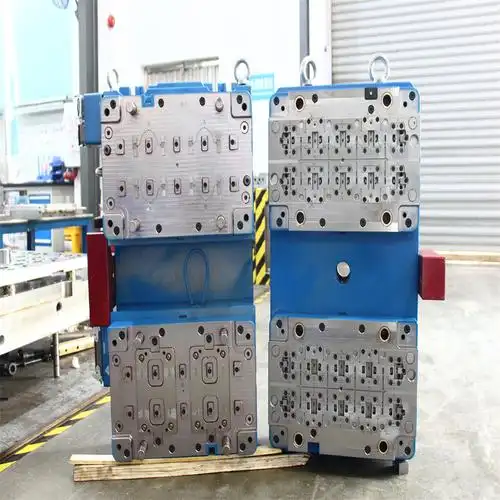
Align Injection Mold Type with Part Geometry and Functional Complexity
Single-Cavity, Multi-Cavity, and Family Molds: When Each Is Optimal for Complex Parts
Mold configuration directly impacts precision and cost-efficiency for geometrically intricate components. Single-cavity molds deliver exceptional dimensional accuracy (±0.025 mm), making them ideal for high-complexity parts requiring tight tolerances—such as medical implant housings—though per-unit costs are higher. Multi-cavity systems excel in high-volume production of identical parts like automotive connectors, reducing cycle time by 30–50% while maintaining SPI Class 102 precision. Family molds support assemblies of dissimilar but functionally linked parts—e.g., electronics enclosures with mating interfaces—but require rigorous flow balancing to prevent sink marks in thicker sections.
Stack and Insert Molds for Undercuts, Micro-Features, and Thin-Wall Integrity
Geometric complexities such as internal threads or 0.2 mm wall sections demand advanced mold engineering. Stack molds double output capacity for thin-walled consumer packaging without increasing press tonnage, using symmetrical cooling to prevent warpage in polycarbonate components. For undercuts exceeding 5° draft angles, collapsible cores or side-action mechanisms enable clean ejection—critical for turbine blade prototypes. Insert molds allow localized material substitution, such as replacing hardened steel with aluminum in low-wear zones, cutting tooling costs by up to 40% for low-volume aerospace sensors.
Design Critical Injection Mold Components for Precision Flow and Dimensional Stability
Runner, Gate, and Vent Placement Guided by Mold Flow Analysis
Achieving consistent part quality hinges on strategic placement of runners, gates, and vents—guided by computational mold flow simulation. These tools map polymer behavior under pressure, identifying stagnation points and air entrapment risks before tooling begins. Engineers optimize gate locations to balance fill rates across complex geometries, mitigating weld line weaknesses. Vents placed at predicted gas-trapped zones prevent burns and voids—especially in deep ribs or textured surfaces. For instance, simulations for thin-walled medical components show gate misplacement increases short-shot risk by 30%, while vent depths of 0.015–0.02 mm reliably enable gas escape without flash.
Cooling Channel Architecture to Minimize Warpage in Asymmetric, High-Aspect-Ratio Parts
Conformal cooling channels reduce warpage by up to 40% in unbalanced components like aerospace brackets or electronic housings. By mirroring the cavity contour, they ensure uniform heat extraction—essential for materials with high shrinkage differentials. In parts with thickness transitions exceeding a 3:1 ratio, staged cooling zones compensate for thermal mass disparities. Counter-flow designs in sections over 10 mm thick maintain ±0.05 mm flatness; asymmetric channel spacing resolves differential cooling in L-shaped geometries. Thermal simulations confirm this approach prevents sink marks at thickness junctions.
Evaluate Injection Mold Investment Using Tolerance Class, Risk, and ROI Trade-Offs
SPI Mold Classification (101–104) and Real-World Implications for Aerospace and Medical Components
The SPI (Society of the Plastics Industry) mold classification system defines four tiers (101–104) based on durability, tolerance precision, and production lifespan. Class 101 molds—engineered for 1 million+ cycles and tolerances under ±0.025 mm—are essential for safety-critical aerospace components like turbine seals and medical implants. In contrast, Class 103/104 molds (50,000–100,000 cycles, ±0.05 mm tolerance) suit prototyping or non-critical consumer goods. A 2025 industry study found aerospace manufacturers using Class 101 tooling reduced part failure rates by 34% versus lower-tier alternatives—justifying their 40–60% higher upfront cost through lower scrap, rework, and recall exposure.
Tiered Mold Specification Framework: Matching Tolerance Bands (±0.025 mm vs. ±0.05 mm) to Application-Critical Zones
Adopting variable tolerance zones within a single mold optimizes both cost and performance. Critical features—such as fluid-sealing surfaces or interlocking mechanisms—require ±0.025 mm precision, while non-functional areas like structural ribs or housings tolerate ±0.05 mm. This selective approach lowers machining expenses by 18–22% compared to uniformly tight-tolerance tooling. Mold flow analysis is essential to isolate high-stress or functional zones upfront. As outlined in SPI’s Precision Molding Guidelines, targeted tolerancing cuts production waste by up to 27% in complex components like cardiac device housings or drone motor mounts.
| Tolerance Band | Typical Applications | Cost Impact vs. Standard |
|---|---|---|
| ±0.025 mm | Medical fluid paths, optical lenses | +35–50% tooling cost |
| ±0.05 mm | Structural ribs, housings | Baseline (no premium) |
FAQ
What are the benefits of using single-cavity molds?
Single-cavity molds offer exceptional dimensional accuracy, making them ideal for high-complexity parts requiring tight tolerances, though they may lead to higher per-unit costs.
How do stack molds enhance thin-wall integrity?
Stack molds double output capacity without increasing press tonnage and use symmetrical cooling to prevent warpage in thin-walled components.
What is the SPI mold classification system?
The SPI mold classification system categorizes molds into four tiers based on cycle durability, tolerance precision, and production lifespan.
Why are variable tolerance zones beneficial?
They optimize cost and performance by applying tighter tolerances only to critical features, reducing machining expenses and production waste.