 EN
EN

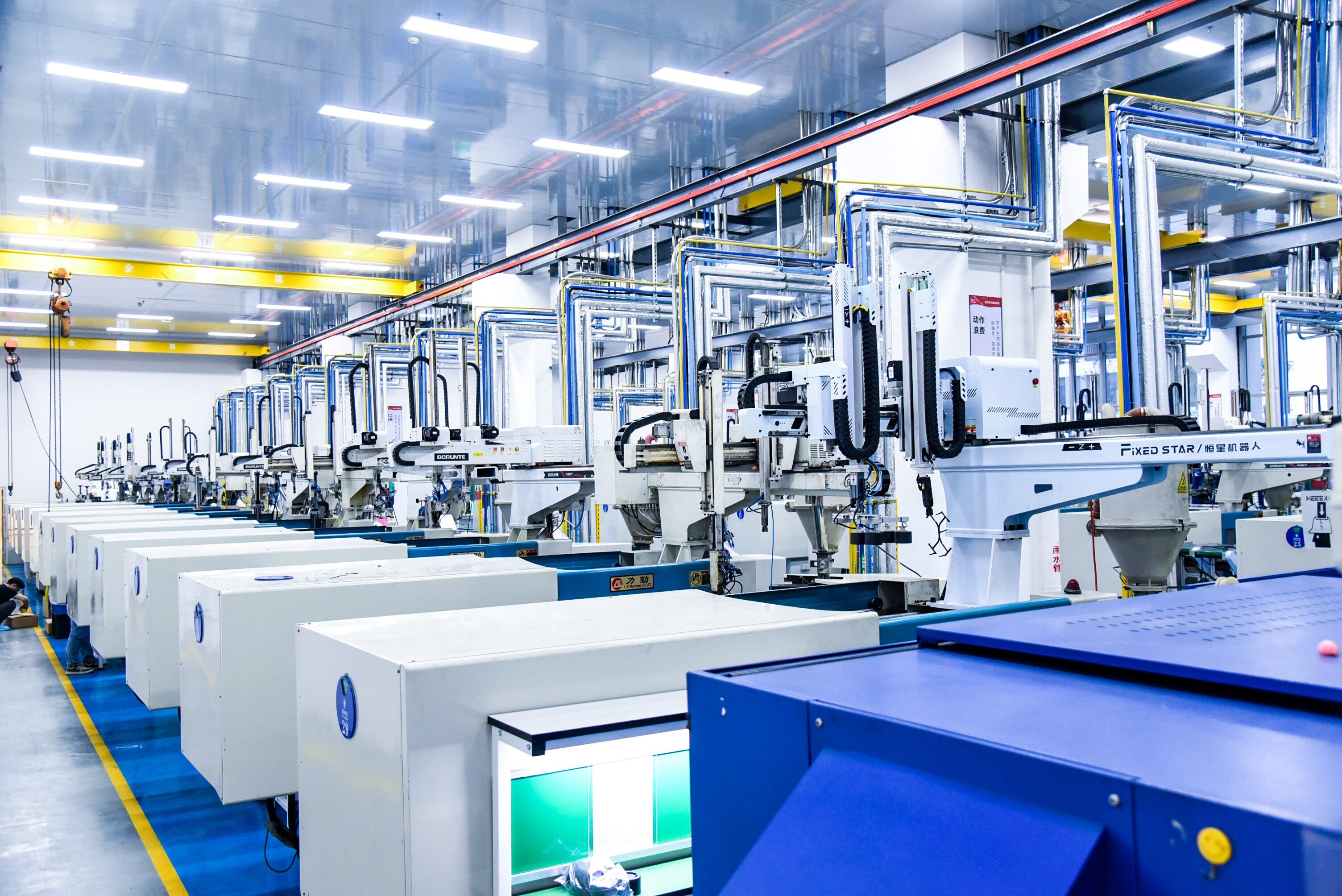
Core Capabilities: Tooling Precision, Modern Machinery, and Technical Expertise
In-House Tool Building and High-Precision Mold Construction
Top injection mold manufacturers keep their tool building operations completely in house so they can hit those super tight tolerances of plus or minus 0.0001 inches (about 0.0025 mm) needed for really important parts. By controlling everything themselves, these companies avoid all sorts of problems that come with outside vendors and can tweak things on the fly as molds get built. They use fancy measurement equipment like coordinate measuring machines to check if the actual tools match up with computer designs down to fractions of a micron. Some companies also apply special coatings to their molds that actually make them last longer. The numbers back this up too. Factories that start using statistical process control right from the drawing board see around 32 percent fewer defects than traditional methods according to industry reports. Considering how expensive it gets when tooling needs fixing later on (we're talking about average costs hitting $740,000), getting precision right from day one isn't just good practice anymore. It's become essential for staying competitive in today's market.
Advanced CNC, EDM, and Automation Infrastructure with Process Validation
Modern facilities integrate multi-axis CNC machining centers, electrical discharge machining (EDM), and robotic automation to achieve repeatable micron-level accuracy. This integrated ecosystem delivers:
- Complex Geometries: 5-axis CNC systems machine undercuts and organic contours inaccessible to traditional methods
- Thermal Stability: Climate-controlled environments with thermally compensated spindles maintain ±0.0002" tolerance across extended 72+ hour runs
- Automated Quality Gates: In-process sensors perform real-time dimensional validation, flagging deviations before they escalate
| Tolerance Class | Permissible Variation | Typical Application |
|---|---|---|
| Commercial | ±0.005" (0.127 mm) | Consumer goods |
| Precision | ±0.001" (0.025 mm) | Automotive |
| Ultra-Precision | ±0.0002" (0.005 mm) | Medical implants |
Closed-loop manufacturing execution systems (MES) document every machining parameter—ensuring full AS9100/ISO 9001 traceability from raw material receipt to finished mold.
Quality Assurance Rigor: Certifications, SPC, and Full Traceability
ISO 9001:2015 and ISO 13485 Compliance as Non-Negotiable Benchmarks
For manufacturers in regulated industries, ISO 9001:2015 and ISO 13485 aren't just items to tick off a list but essential quality foundations. The reality is these international standards require companies to implement thorough process controls throughout every stage from initial design all the way through production and record keeping. Industry data suggests certified facilities typically see around 40-50% fewer defects compared to those without proper certification. When it comes to medical devices, ISO 13485 takes things even further with its emphasis on risk assessment during product development, formal procedures for making changes, and complete tracking of materials used. This framework aligns well with both FDA regulations (21 CFR Part 820) and European Union Medical Device Regulations. Manufacturers who skip these certifications often struggle during audits and end up with incomplete or disorganized quality documentation that makes regulatory inspections much more challenging.
Real-World Application of Statistical Process Control and Automated Inspection
Leading mold manufacturers integrate statistical process control right into their molding operations, keeping track of things like cavity pressure levels, melt temps, and clamp forces as they happen. When measurements go beyond the acceptable range of plus or minus 0.05 millimeters, systems automatically send out warnings so problems can be fixed before bad parts get mixed in with good ones. This approach cuts down on waste by about thirty percent according to industry data from last year. Alongside this, companies run computerized coordinate measuring machine checks on all important features across every single product. These inspections create digital replicas that connect each actual item back to how it was made. What we end up with is complete tracking throughout the whole manufacturing process. This isn't just about meeting regulations either. When something goes wrong, having this detailed record makes finding what caused the issue much faster and easier for everyone involved.
Engineering Partnership: DFM Support, Prototyping, and Collaborative Development
Early-Stage Design for Manufacturability (DFM) Guidance from Your Injection Mold Maker
Getting the mold maker involved right from the concept stage instead of waiting until all the drawings are done is actually where most of the real value starts showing up. When we run those DFM reviews early on, we catch problems before they become big headaches. Think about things like too many undercuts, walls that aren't consistent in thickness, or tolerances that just aren't going to work in practice. These issues can really slow things down, blow out budgets, or even cause parts that don't function properly. Take something simple like changing draft angles or moving where gates go before making the tool itself. Doing these adjustments upfront saves a ton of money down the road. Some industry reports suggest around 30% savings on engineering changes when this happens early enough. The bottom line is working together from day one brings tangible benefits that nobody wants to miss out on.
- Cost reduction, via optimized material use and shorter cycle times
- Faster time-to-market, by resolving bottlenecks before tooling starts
- Higher first-pass yield, through design decisions grounded in proven process capability
Rapid Prototyping, Pilot Runs, and Joint Problem-Solving Frameworks
When people think about prototyping, they often focus on how something looks, but really it's all about seeing if it works properly in real situations. The top mold manufacturers these days are using what they call rapid tooling techniques to get working prototypes made within three days or so. They actually use the same kinds of materials and methods that would be used in mass production. After that comes the pilot run phase where companies put their full scale tools through their paces. These tests happen under actual operating conditions while different departments work together to monitor how everything performs. The goal is to catch any issues before going into full production.
| Phase | Key Metrics Tracked | Outcome Focus |
|---|---|---|
| Prototyping | Dimensional accuracy, stress points | Design refinement |
| Pilot Run | Cycle time, defect rates | Process stabilization |
This iterative, data-informed framework reduces time-to-market by 40% versus linear, siloed development (Manufacturing Journal 2024). Crucially, it shifts communication from status reporting to shared problem-solving—turning technical challenges into joint innovation opportunities.
Operational Trust: Communication Transparency, IP Security, and On-Time Delivery
Building operational trust means focusing on three main areas: keeping everyone informed as things happen, protecting our intellectual property at every stage, and making sure deliveries actually show up when they're supposed to. Our project dashboards get updated every day with what's been accomplished, pictures of tools being used, and results from quality checks. This cuts down on confusion and makes everything much more predictable for everyone involved. When it comes to keeping our ideas safe, we've got multiple layers of protection going. We require non-disclosure agreements before anyone even starts working with us, send files using strong encryption methods, and control who gets access to our facilities. The numbers back this up too - companies lose around $4.35 million each time someone steals their trade secrets according to a recent study. Getting products delivered on schedule isn't just about good intentions either. We plan ahead using smart scheduling systems connected to real-time logistics data, so parts arrive exactly when needed on factory floors. Assembly lines grinding to a halt costs manufacturers roughly $740,000 per hour wasted according to industry reports. By implementing these approaches, suppliers stop being mere order fulfillment providers and become true collaborators in our success story.
FAQ
What is tooling precision?
Tooling precision refers to the ability of manufacturers to create molds and tools with incredibly tight tolerances, often within a fraction of a micron, which is essential for producing high-quality parts.
How does statistical process control help in manufacturing?
Statistical process control involves using data to monitor and control the manufacturing process. It helps identify deviations and reduce defects, improving overall product quality and efficiency.
Why is ISO certification important?
ISO certifications, like ISO 9001:2015 and ISO 13485, ensure that manufacturers adhere to international quality standards, leading to fewer defects and compliance with regulatory requirements.
What is Design for Manufacturability (DFM)?
DFM is the practice of designing products in a way that optimizes their manufacturability, leading to cost and time savings, improved quality, and reduced engineering changes.
Table of Contents
- Core Capabilities: Tooling Precision, Modern Machinery, and Technical Expertise
- Quality Assurance Rigor: Certifications, SPC, and Full Traceability
- Engineering Partnership: DFM Support, Prototyping, and Collaborative Development
- Operational Trust: Communication Transparency, IP Security, and On-Time Delivery
- FAQ