 EN
EN

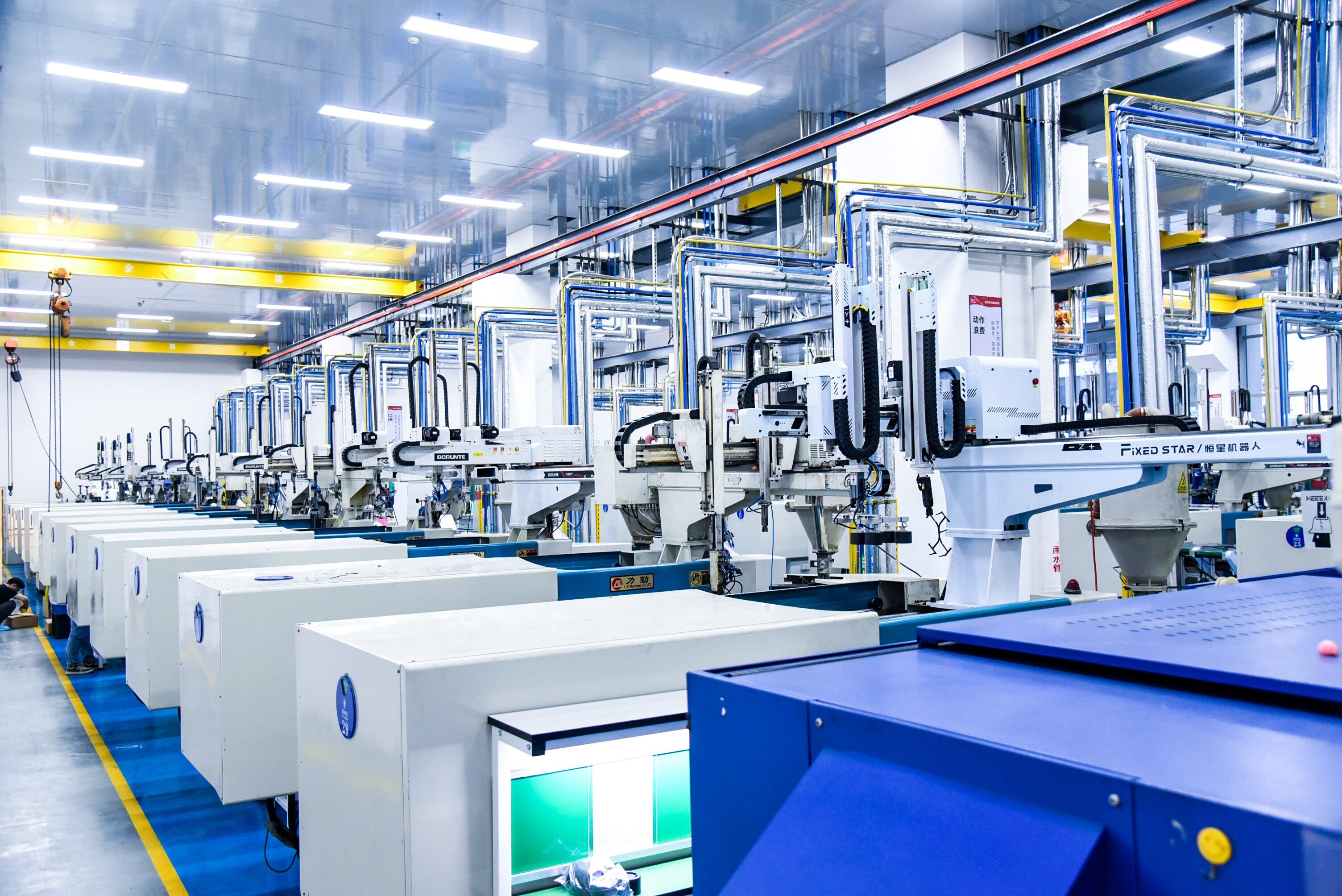
Mold Design Flaws That Cause Injection Molding Defects
Parting line misalignment leading to flash and dimensional inaccuracy
When mold halves fail to align precisely during clamping, molten polymer escapes through microscopic gaps along the parting line—producing thin, wafer-like flash that demands costly secondary trimming. More critically, misalignment induces dimensional deviations exceeding ±0.5mm tolerance thresholds in 68% of cases (Plastics Technology 2023), directly compromising assembly fit. Precision machining of mold components and real-time tonnage monitoring during clamping prevent these errors before production begins.
Poor gate selection and placement resulting in weld lines, jetting, and uneven filling
Gate location governs polymer flow behavior: oversized gates cause turbulent jetting—visible ripples from uncontrolled material entry—while undersized gates yield weak weld lines where converging flows fail to fuse, reducing part strength by up to 40%. Strategic gate positioning, validated with industry-standard flow simulation software, ensures balanced cavity filling and eliminates both cosmetic blemishes and structural weaknesses.
Insufficient venting causing air traps, burn marks, and short shots
Trapped air generates three signature defects when vent channels are undersized, misplaced, or clogged:
- Air traps, forming internal voids that weaken structural integrity
- Burn marks, appearing as blackened streaks due to localized gas ignition (the “diesel effect”)
- Short shots, where air pockets block full cavity fill
| Defect | Root Cause | Preventive Measure |
|---|---|---|
| Air traps | Inadequate vent depth | 0.03mm vent channels per material specification |
| Burn marks | Compressed gas ignition | Vent placement at flow termini |
| Short shots | Air pressure resistance | Vacuum-assisted venting systems |
Proper vent design follows material-specific guidelines—typically 0.025–0.05mm depth—and places vents at last-to-fill zones to reliably evacuate gases without leakage.
Injection Molding Process Parameter Errors and Their Fixes
Injection speed and pressure mismatches inducing flow lines, voids, and warping
Incorrect injection speed and pressure settings trigger interdependent defects. Flow lines arise from low injection speed, creating inconsistent cooling and surface rippling; increasing speed by 15–20% typically resolves them. Voids form in thick sections when holding pressure is insufficient to compress material during packing—raising pressure by 10–15% and extending hold time mitigates this. Warping stems from pressure imbalances across filling and cooling phases, generating internal stresses; ramped pressure profiles combined with uniform mold cooling significantly reduce distortion. Crucially, these parameters must be tuned together: adjusting one without compensating for others often shifts—rather than solves—the defect.
Temperature imbalances (melt, mold, ambient) worsening sink marks and delamination
Inconsistent thermal conditions across melt, mold, and environment amplify failure modes. Sink marks occur when surface layers solidify faster than underlying material, pulling inward; lowering melt temperature by 5–10°C while extending cooling time by 20% promotes uniform solidification. Delamination—layer separation—often traces to moisture-laden hygroscopic resins interacting with thermal fluctuations during flow; pre-drying to below 0.02% moisture content preserves molecular integrity. Ambient drafts disrupt mold temperature stability, requiring environmental controls like enclosed workspaces. Infrared sensors placed at multiple mold locations detect variations exceeding ±3°C, enabling real-time correction. Consistent thermal management not only prevents defects but also supports cycle time optimization.
Material Handling and Selection Mistakes in Injection Molding
Material selection and handling errors frequently initiate defects in injection molding. Choosing polymers incompatible with service conditions—such as temperature extremes or chemical exposure—accelerates degradation, while inadequate drying of hygroscopic resins causes moisture-related voids and silver streaks. Contamination from storage or transport introduces particulates that create weak points and surface blemishes. Using recycled material beyond recommended ratios reduces tensile strength by up to 15%, increasing fracture risk. Improper pellet handling further destabilizes melt flow, exacerbating sink marks and dimensional inaccuracies. Collectively, these oversights elevate scrap rates by 20–30% in typical production runs. Rigorous material validation protocols—including moisture testing, lot traceability, and controlled storage environments—are essential safeguards against avoidable failures.
Part Geometry Pitfalls That Compromise Quality and Efficiency
Non-uniform wall thickness triggering sink marks, warpage, and extended cycle times
Inconsistent wall thickness remains among the most common injection molding design flaws. Variations exceeding 25% between adjacent sections produce uneven cooling rates: thicker areas solidify slower, causing sink marks as material contracts inward and warpage due to differential shrinkage stresses. This forces longer cycle times to ensure complete solidification. A 2023 Plastics Industry Association study found that 68% of warpage issues stem from poor thickness management. Uniform walls below 4mm optimize cooling efficiency, material usage, and part consistency.
Sharp corners and improper rib-to-wall ratios causing stress concentration and cracking
Internal sharp corners act as mechanical failure accelerators. Stress concentrates at these points, exceeding material limits under functional loading—especially in glass-filled polymers—leading to premature cracking. Similarly, ribs thicker than 60% of adjoining walls generate sink lines and internal voids due to localized overpacking. Maintaining rib-to-wall ratios below 0.6:1 distributes stress evenly, while radius corners (minimum 0.5× wall thickness) reduce stress concentration by up to 200% compared to sharp angles.
Proven Preventive Strategies for Reliable Injection Molding
Root cause mapping: Differentiating design, process, material, and tooling failure modes
Systematic root cause analysis is essential for eliminating recurring injection molding defects. Begin by categorizing failures into four distinct domains:
- Design flaws (e.g., non-uniform walls causing sink marks)
- Process errors (e.g., incorrect melt temperature worsening warpage)
- Material issues (e.g., inconsistent resin viscosity or moisture content)
- Tooling failures (e.g., worn or clogged vents causing burn marks)
Facilities using structured root cause mapping reduced defect rates by 38% compared to reactive troubleshooting (2023 industry study). Cross-functional reviews—engaging designers, material scientists, and process engineers—enable precise failure isolation. Early manufacturer involvement during prototyping supports preemptive corrections via mold flow simulation and Design for Manufacturability (DFM) principles. This proactive approach cuts rework costs by up to 27% and extends tool life.
Frequently Asked Questions
What are common defects in injection molding caused by mold design flaws?
Common defects include flash, dimensional inaccuracy, weld lines, jetting, uneven filling, air traps, burn marks, and short shots.
How can injection molding defects be prevented?
Defects can be prevented through precision machining, real-time monitoring, strategic gate placement, proper vent design, and consistent thermal management.
What role does material handling play in injection molding quality?
Proper material handling ensures polymers are suitable and dry, preventing moisture-related defects and contamination that elevate scrap rates.
Table of Contents
- Mold Design Flaws That Cause Injection Molding Defects
- Injection Molding Process Parameter Errors and Their Fixes
- Material Handling and Selection Mistakes in Injection Molding
- Part Geometry Pitfalls That Compromise Quality and Efficiency
- Proven Preventive Strategies for Reliable Injection Molding
- Frequently Asked Questions