 EN
EN

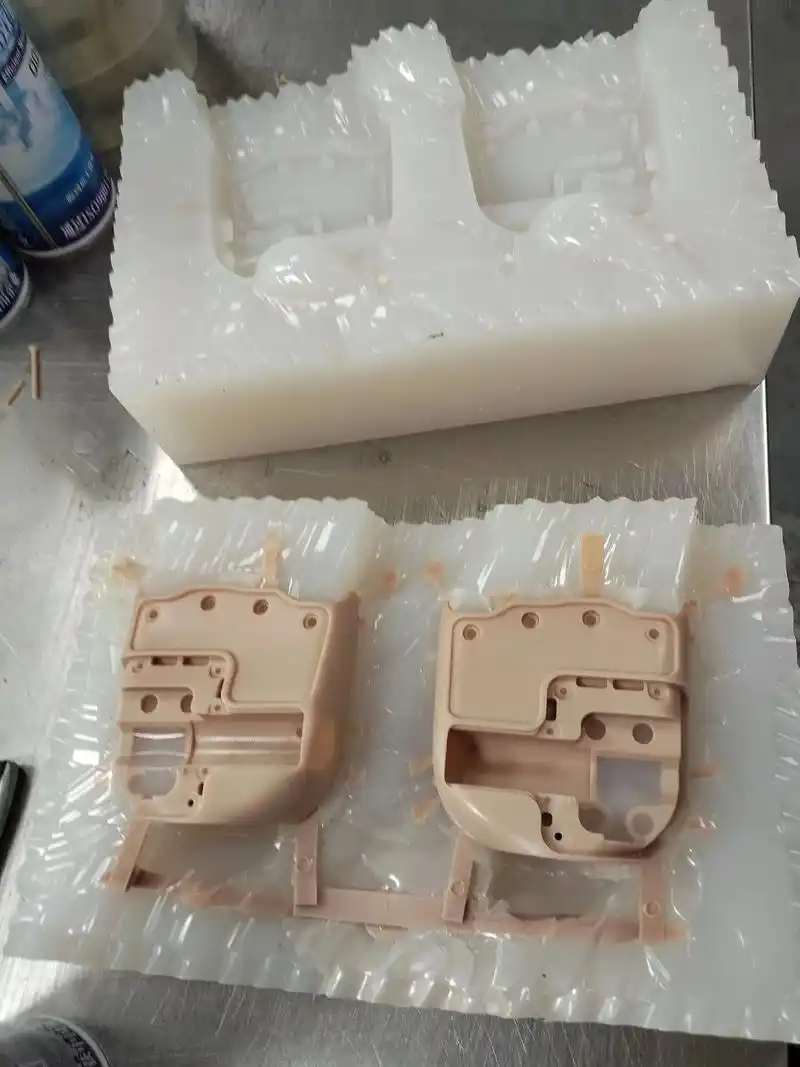
Cooling, Flow, and Cycle Time: Core Mold Plastic Design Drivers
Cooling Channel Layout and Thermal Uniformity for Faster, Consistent Cycles
Cooling accounts for 60–80% of total cycle time—making it the single largest lever for efficiency gains. Strategic cooling channel placement ensures uniform heat extraction across the part, minimizing thermal gradients that cause differential shrinkage, warpage, and sink marks. Conformal cooling—achieved via metal 3D printing to trace part geometry—improves heat transfer by up to 30% versus conventional straight-line channels, significantly shortening solidification time without compromising dimensional stability.
Gate Design and Placement to Optimize Fill Balance and Minimize Warpage
Gate location governs flow front progression, pressure distribution, and residual stress development. Balanced multi-gate layouts prevent hesitation, air entrapment, and weld line formation in complex parts. Oversized gates increase shear heating and material degradation; undersized ones freeze prematurely, raising rejection rates by as much as 15%. Simulation-validated gate types deliver targeted benefits: edge gates reduce residual stress in thin-walled components, while diaphragm gates eliminate weld lines in rotationally symmetric parts—cutting post-molding warpage by 22%, per the 2024 Polymer Processing Report.
Wall Thickness Consistency and Mitigation of Racetrack Effect in Mold Plastic Flow
Maintaining wall thickness within ±0.15 mm tolerance is essential for predictable fill behavior, uniform cooling, and mechanical integrity. Abrupt transitions trigger the racetrack effect, where melt preferentially surges through thicker sections—leading to air traps, incomplete filling, and localized overheating. Design best practices include rib-to-wall ratios ≤60% and gradual transitions (≥3:1 taper) to avoid stagnation zones. Mold flow analysis confirms that consistent 1.5–3 mm walls reduce cycle time by 18% compared to variable profiles and eliminate sink marks in high-gloss applications.
Design for Manufacturability (DFM) in Mold Plastic Construction
Draft Angles, Undercuts, and Ejection System Design to Reduce Sticking and Downtime
Draft angles of 1–3° per side enable reliable part release by counteracting vacuum lock and surface adhesion during ejection. Insufficient draft increases cycle time by 15–30% and raises the risk of cosmetic damage or part fracture. Undercuts necessitate side-actions or lifters—mechanisms that add cost, complexity, and failure points—so their use should be minimized through thoughtful part orientation and geometry. Ejector systems must apply balanced force via optimally placed pins, sleeves, or blades to prevent distortion; uneven loading causes ejection-related defects and accelerates wear. Proactive maintenance of ejector components further reduces unplanned downtime.
Venting Strategy and Air Trapping Prevention to Eliminate Defects and Rework
Poor venting contributes to 23% of injection molding defects—including burns, short shots, and voids—by trapping compressed air ahead of the melt front. Effective vents follow predicted flow paths: placed at weld lines, cavity extremities, and deep ribs, with depths tuned to resin viscosity (0.01–0.03 mm for standard thermoplastics). In challenging geometries, porous metal inserts or micro-vent technologies offer controlled air escape without flash. Well-designed venting suppresses air compression temperatures by up to 70°C, preventing thermal degradation and ensuring complete, repeatable cavity fills—slashing rework and boosting first-pass yield.
Material Compatibility and Mold Longevity in High-Volume Mold Plastic Production
Plastic Resin Selection Impact on Shrinkage, Cycle Time, and Mold Plastic Wear
Resin properties directly shape process windows and tool life. Shrinkage variability (0.5–1.5%) introduces dimensional drift across production runs, increasing inspection burden and scrap. High-shrink resins like nylon extend cooling phases by 15–20% per cycle, lowering throughput. Abrasive formulations—especially glass- or mineral-filled compounds—accelerate cavity erosion; studies indicate up to a 30% reduction in mold service life when processing such materials. Selecting resins with stable thermal expansion and low-viscosity flow characteristics supports tighter tolerances, lower clamp forces, and reduced flash risk—preserving precision over 100,000+ cycles.
Material Property Impacts
| Property | Production Impact | Optimization Approach |
|---|---|---|
| Shrinkage Rate | Dimensional accuracy deviations | Use additives for stability |
| Thermal Conductivity | Extended cooling time | Optimize cooling channel design |
| Abrasiveness | Premature mold surface degradation | Apply wear-resistant coatings |
Hardness, Coating, and Maintenance Scheduling to Maximize Mold Plastic Lifespan
Tool steel hardness (50–60 HRC) provides foundational resistance to plasticizing pressure and thermal fatigue. Surface enhancements—such as PVD-coated titanium nitride—reduce abrasive wear by 40–60% and improve release performance. Preventive maintenance every 25,000 cycles—including ultrasonic cleaning, corrosion assessment, and ejector lubrication—reduces unplanned downtime by up to 35%. When paired with real-time thermal monitoring to detect hotspots and resin compatibility protocols, these measures prevent approximately 80% of premature mold failures in high-volume environments.
FAQ
Why is conformal cooling crucial in mold plastic design?
Conformal cooling enhances heat transfer efficiency by closely following the part's geometry, reducing solidification time dramatically without affecting dimensional stability.
How does gate placement affect the quality of the molded plastic?
Gate placement influences flow front progression and residual stress, hence critical for fill balance and minimizing warpage. Simulated gate designs like edge or diaphragm gates help achieve specific benefits.
What are the repercussions of poor venting in mold plastic production?
Poor venting leads to defects like burns and voids by trapping air. Strategic vent placement ensures proper airflow and enhances the mold's fill consistency.
How do resin properties impact mold plastic production?
Resin properties determine dimensional stability and wear resistance. Choosing the right resin affects shrinkage, cycle time, and overall mold longevity.