 EN
EN

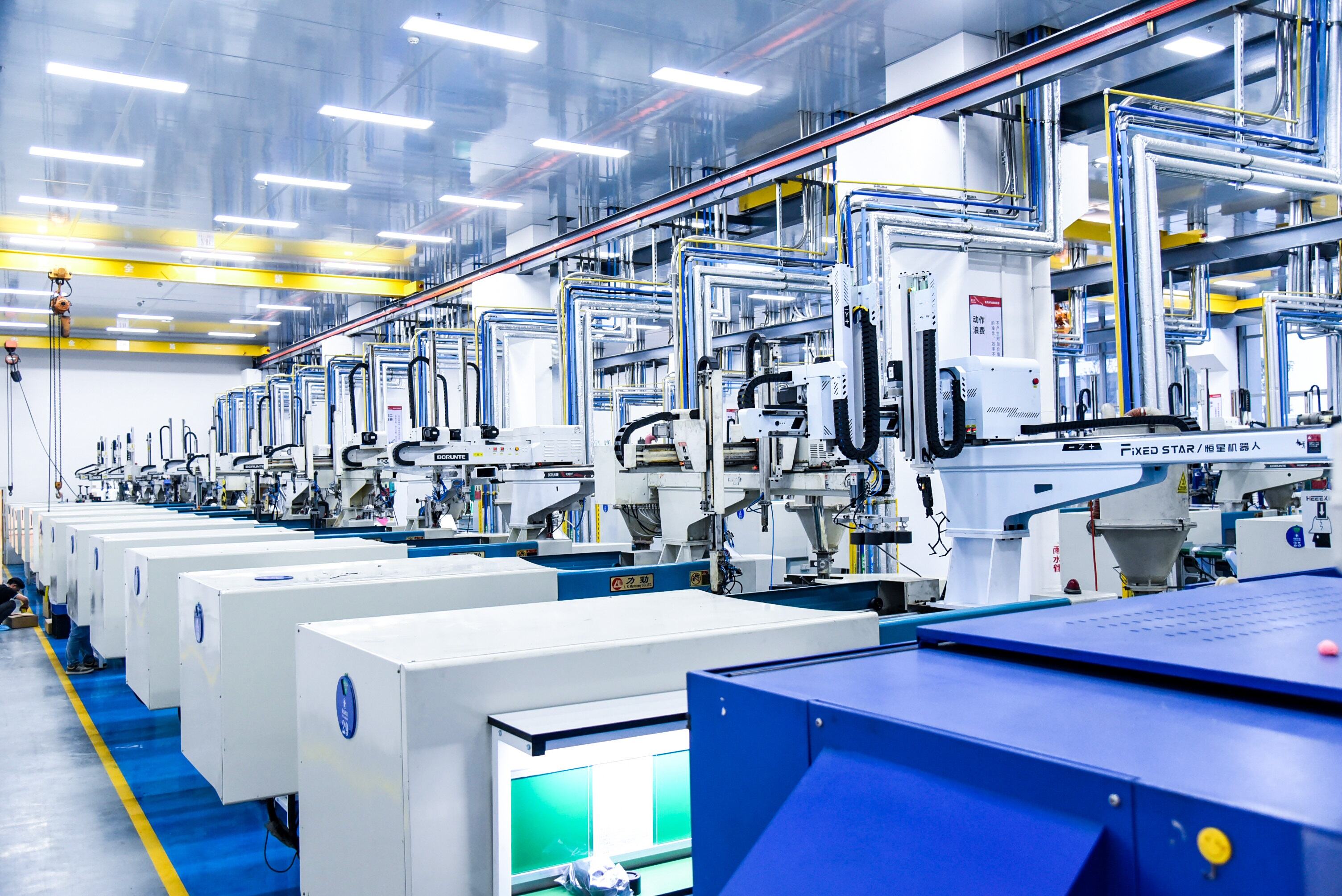
Environmental Exposure: Key External Threats to Plastic Parts Durability
UV Radiation and Photo-Oxidative Degradation in Outdoor Applications
Prolonged ultraviolet (UV) exposure triggers irreversible photo-oxidative degradation, breaking polymer chains and causing brittleness, fading, and surface crazing. This damage can slash service life by up to 60% for unprotected plastics like polypropylene (PP) in outdoor fixtures. Photo-oxidation attacks molecular bonds—particularly at tertiary carbon sites—permanently reducing elongation-at-break and tensile strength, critical failures in structural components.
Thermal Stress, Humidity, and Hydrolytic Degradation in High-Temperature Environments
Temperature fluctuations generate cyclic internal stresses that accelerate creep and micro-cracking. When combined with humidity, thermal cycling drives hydrolytic degradation in moisture-sensitive polymers: polyesters like PET lose over 40% of impact strength within one year in tropical climates. This manifests as warping, dimensional instability, and compromised seals—especially problematic in enclosures or fluid-handling systems.
Chemical Contact and Microbial Degradation in Industrial or Medical Settings
Solvents, acids, alkalis, and oxidizing agents initiate chemical degradation through swelling, dissolution, or molecular scission. Nylon 6/6, for example, absorbs chemicals up to 9% of its weight, weakening intermolecular bonds and promoting stress corrosion cracking. In medical devices or wastewater infrastructure, biofilm formation accelerates microbial-induced degradation via localized enzyme secretion—compromising both aesthetics and function.
Polymer Chemistry: How Intrinsic Molecular Structure Dictates Plastic Parts Longevity
Molecular Weight, Chain Architecture, and Cross-Linking Effects on Mechanical Retention
The molecular architecture of polymers fundamentally governs the durability of plastic parts. Longer polymer chains—especially those with molecular weights above 100,000 g/mol—enhance toughness and fatigue resistance, delivering up to 30% greater tensile strength than lower-MW variants. Chain entanglement acts as intrinsic reinforcement:
- Linear polymers (e.g., HDPE) resist deformation but lack elasticity
- Branched chains (e.g., LDPE) improve impact resistance
- Cross-linked networks (e.g., vulcanized rubber or epoxy thermosets) prevent chain slippage, boosting creep resistance by 40%
Dense covalent cross-linking, as seen in thermosets, directly correlates with superior long-term mechanical retention under sustained load or elevated temperature.
Degradation Susceptibility Across Common Plastics: PE, PP, PVC, PET, PC, PU, and PLA
Degradation pathways are dictated by backbone chemistry. Hydrolysis targets ester bonds in PET and PLA; UV radiation preferentially cleaves tertiary C–H bonds in PP; PVC releases HCl when heated above 60°C, triggering autocatalytic embrittlement. Polycarbonate (PC) undergoes UV-induced yellowing due to aromatic ring oxidation, while polyurethane (PU) resists oils but hydrolyzes readily in humid environments. These intrinsic vulnerabilities inform robust material selection:
| Polymer | Primary Degradation Mode | Critical Weakness |
|---|---|---|
| PE/PP | Photo-oxidation | UV susceptibility |
| PVC | Thermal dehydrochlorination | Heat sensitivity |
| PET | Hydrolysis | Moisture absorption |
| PC | UV yellowing | Poor weatherability |
| PLA | Hydrolytic scission | Compostability trade-off |
Material Engineering: Additives and Composites That Extend Plastic Parts Service Life
UV Stabilizers, Antioxidants, Hydrolysis Inhibitors, and Reinforcing Fillers
Strategic material engineering extends plastic parts service life by targeting specific degradation mechanisms. UV stabilizers—such as hindered amine light stabilizers (HALS) and UV absorbers like benzotriazoles—absorb or quench solar radiation before it initiates photo-oxidation. Antioxidants (e.g., phenolic or phosphite types) interrupt oxidative chain reactions that cause embrittlement during processing or high-temperature use. Hydrolysis inhibitors, including carbodiimides, scavenge acidic byproducts in polyesters and polyamides, slowing moisture-driven chain scission. Reinforcing fillers—glass fibers, mineral fillers, or nanoclays—not only increase stiffness and impact resistance by up to 40%, but also reduce moisture permeability and thermal expansion, improving dimensional stability in dynamic environments.
Design and Processing: How Manufacturing Choices Impact Real-World Plastic Parts Durability
Mold Design, Residual Stress, Wall Thickness Uniformity, and Stress Concentration Mitigation
Manufacturing choices exert lasting influence on plastic parts durability. Poor mold design leads to uneven flow and cooling, locking in residual stress that predisposes parts to premature cracking—especially under thermal or mechanical cycling. Non-uniform wall thickness causes differential shrinkage and internal strain, accelerating warpage and fatigue failure. Sharp corners act as stress concentrators; incorporating generous radii reduces peak stress by up to 40% compared to right-angle transitions. Together, these design and processing optimizations enhance fatigue resistance and dimensional fidelity—directly extending service life in demanding applications.
FAQs on Plastic Parts Durability
What is the impact of UV radiation on plastic parts?
UV radiation causes photo-oxidative degradation, resulting in brittleness, fading, and surface crazing, which can significantly reduce the service life of plastics in outdoor applications.
How do humidity and temperature fluctuations affect plastic parts?
Humidity combined with temperature fluctuations leads to hydrolytic degradation, causing warping, dimensional instability, and compromised seals. This is especially problematic in high-temperature environments.
Can additives improve the durability of plastic parts?
Yes, additives like UV stabilizers, antioxidants, and hydrolysis inhibitors can extend the service life of plastic parts by mitigating specific degradation mechanisms.
Why is mold design important in plastic manufacturing?
Good mold design prevents residual stress, non-uniform wall thickness, and stress concentration, all of which impact the durability of plastic parts by reducing the likelihood of warpage and fatigue failure.
Table of Contents
- Environmental Exposure: Key External Threats to Plastic Parts Durability
- Polymer Chemistry: How Intrinsic Molecular Structure Dictates Plastic Parts Longevity
- Material Engineering: Additives and Composites That Extend Plastic Parts Service Life
- Design and Processing: How Manufacturing Choices Impact Real-World Plastic Parts Durability
- FAQs on Plastic Parts Durability