 EN

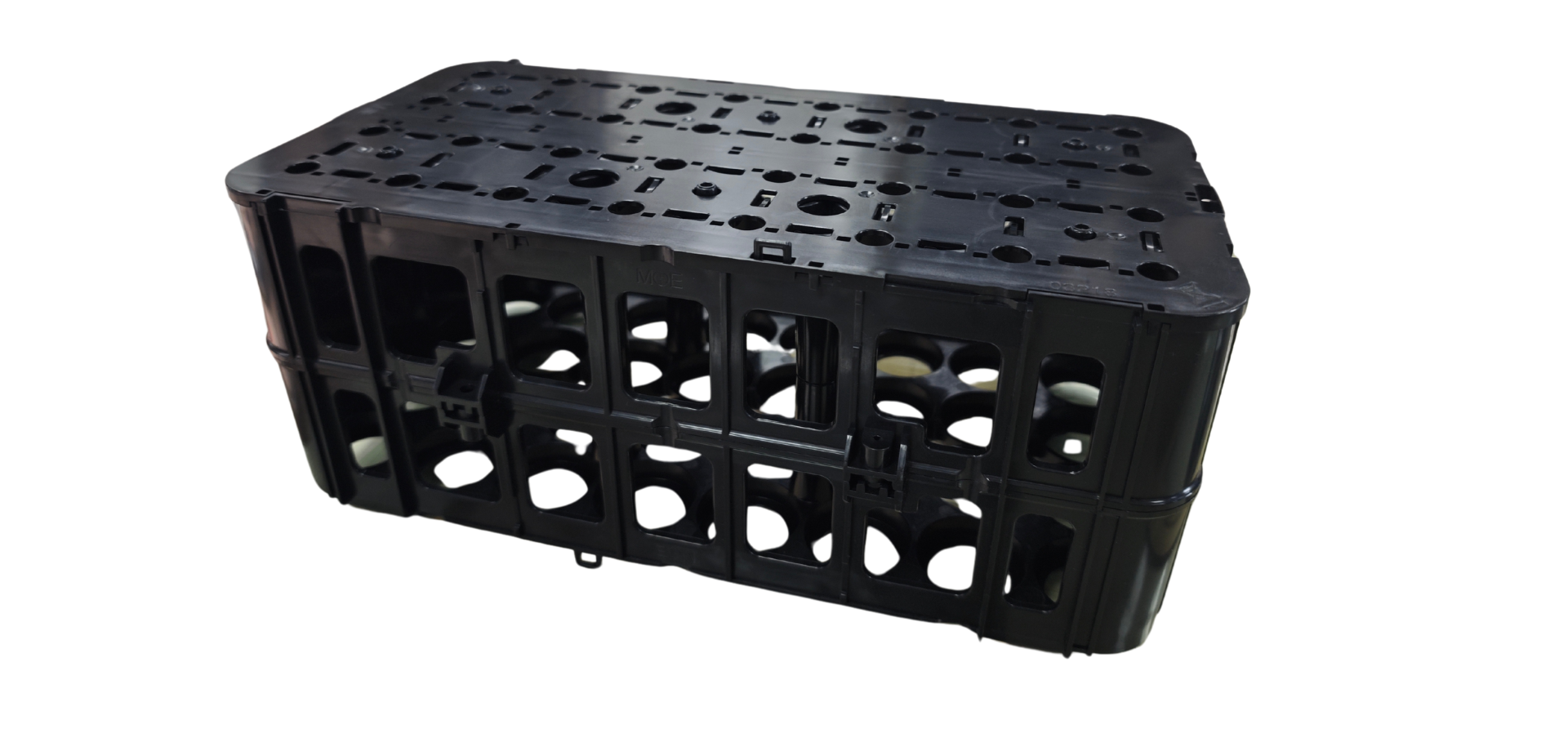
Ubiquity of Plastic Injection Molding Across Consumer Products
High-volume categories: electronics housings, kitchenware, personal care items, and home appliances
Plastic injection molding is the dominant manufacturing method for high-volume consumer goods—delivering precision, consistency, and scalability across electronics, kitchenware, personal care, and home appliances. In electronics, it produces durable, dimensionally stable housings for smartphones, laptops, TV remotes, and routers—parts that require tight tolerances (±0.05 mm), repeatable surface finishes, and integrated features like mounting bosses and EMI shielding ribs.
Kitchenware—including food storage containers, measuring cups, spatulas, and blender jars—is typically molded using multi-cavity tools from FDA-compliant resins such as polypropylene (PP) and polyethylene (PE), enabling rapid output while meeting stringent food-contact safety standards (21 CFR §177.1520).
Personal care items like toothbrush handles, razor bodies, and combs leverage the process’s ability to integrate ergonomic contours, overmolded soft-grip TPE surfaces, and fine-textured finishes—all in a single operation. For home appliances, injection-molded components include control panels, detergent dispensers, knobs, and structural frames that combine electrical insulation, heat resistance (e.g., flame-retardant ABS or PC/ABS blends), and aesthetic versatility.
With typical cycle times of 2–5 seconds and production rates exceeding 1 million units per month per mold, injection molding ensures global affordability and supply chain resilience—making it the foundational process behind modern mass-consumer product ecosystems.
Real-world examples: smartphone cases, toothbrush handles, and appliance control panels
Everyday plastic products illustrate how injection molding merges functional performance with design sophistication. Smartphone cases, for example, integrate internal ribs, precise camera/button cutouts, and textured or matte surfaces—all formed in one cycle without secondary machining. Their thin-walled geometry (often <1.2 mm) relies on optimized melt flow and gate placement to prevent warpage or sink marks.
Toothbrush handles demonstrate functional integration through two-shot molding: a rigid PP or PS core is overmolded with thermoplastic elastomer (TPE) for non-slip grip and improved hygiene—eliminating assembly steps and enhancing user comfort.
Appliance control panels—such as those on washing machines or microwaves—combine transparent polycarbonate windows, tactile button frames, and embedded decorative films with laser-etched or pad-printed graphics. These assemblies achieve crisp edge definition, long-term UV stability, and consistent backlight diffusion—critical for both usability and brand aesthetics.
These examples underscore injection molding’s unique capacity for repeatable precision, geometric complexity, and cost-efficient customization at scale.
Core Advantages Driving Adoption of Plastic Products
Speed and scalability: 2–5 second cycle times enabling >1M units/month per mold
Injection molding achieves industry-leading throughput, with many consumer parts cycling in just 2–5 seconds. A single 32-cavity mold running at 4-second cycles can produce over 1.2 million units per month—enabling brands to meet seasonal demand surges or viral product trends without retooling delays. This velocity stems from tightly controlled thermal management, high-pressure injection (up to 150 MPa), and rapid cooling via conformal channels—hardening thermoplastics in seconds rather than minutes.
Compared to alternatives—such as CNC machining (hours per part) or thermoforming (manual trimming, lower repeatability)—injection molding delivers orders-of-magnitude higher output while maintaining ±0.05 mm dimensional accuracy. That combination allows lean inventory models, near-continuous fulfillment, and responsive scaling across categories from disposable razors to automotive interior trims.
Labor efficiency and consistency: automation minimizes human intervention vs. thermoforming or CNC
Modern injection molding lines are highly automated: robotic arms extract parts, conveyors shuttle them to inline vision inspection systems, and auto-sorting stations route components by tolerance band or cosmetic grade—all with minimal operator involvement. This contrasts sharply with thermoforming, which often requires manual trimming, stacking, and defect sorting, and CNC machining, where each part demands individual fixturing, toolpath programming, and post-process deburring.
By eliminating repetitive manual tasks, injection molding reduces labor costs by up to 60% compared to labor-intensive alternatives—and more critically, it eliminates human-induced variability. Shot-to-shot repeatability ensures every unit meets specification without secondary rework, delivering uniform quality across millions of units. Skilled technicians oversee multiple presses simultaneously, focusing on process optimization and preventive maintenance rather than executing repetitive motions—enhancing both productivity and workforce utilization.
Economic Logic: High Upfront Tooling Investment vs. Low Per-Unit Cost
The decision to adopt injection molding hinges on a strategic capital allocation: a significant upfront investment in precision tooling versus dramatically lower per-unit production costs at scale. This trade-off transforms mold cost from an expense into an amortizable asset—one whose return accelerates rapidly beyond a defined volume threshold.
Break-even analysis: 10,000–50,000 units typically required to offset mold costs
A production-grade steel mold for consumer goods typically costs $25,000–$100,000, depending on complexity, cavity count, and material (e.g., P20 or H13 tool steel). Aluminum molds—used for prototyping or low-volume runs—cost 30–50% less but wear faster and limit annual output. The economic break-even point usually falls between 10,000 and 50,000 units, after which per-part costs drop precipitously.
For instance, a smartphone accessory produced via short-run methods (e.g., vacuum forming or 3D-printed tooling) may cost $2.50/unit. With a dedicated steel mold, that cost falls to $0.80—yielding a $1.70 savings per unit. At 200,000 units annually, this represents $340,000 in avoided cost—fully recovering the mold investment within the first production run. Advanced features like multi-cavity layouts, conformal cooling, or insert molding raise initial tooling cost but further compress per-unit expenses and improve part quality—strengthening ROI for sustained-volume programs.
Design Freedom and Functional Integration in Plastic Products
Complex geometry enablers: undercuts, living hinges, multi-cavity parts, and snap-fit assemblies
Injection molding unlocks unprecedented design freedom—enabling geometries that consolidate functions, reduce part count, and eliminate secondary operations. Undercuts, formed using sliding cores or collapsible inserts, allow internal snap features and side-action details without post-machining. Living hinges—thin, flexible sections molded integrally into rigid PP or PE parts—provide reliable, fatigue-resistant flex points for lids, closures, and packaging.
Multi-cavity molds replicate these complex features across dozens of impressions simultaneously, preserving precision and reducing per-part cycle time. Snap-fit assemblies replace screws, adhesives, and ultrasonic welding—cutting assembly labor by up to 40% and improving field reliability by removing fastener loosening or adhesive degradation.
Collectively, these capabilities reduce material usage by 15–30% versus machined equivalents, shorten lead times, and yield lighter, more serviceable products. It’s why plastic injection molding dominates structural and aesthetic components—from razor housings to laptop chassis—where metal or glass would require costly multi-step fabrication, finishing, and assembly.
Frequently Asked Questions
What types of products are made using plastic injection molding?
Plastic injection molding is commonly used for electronics housings, kitchenware, personal care items, home appliances, and numerous other consumer goods. Examples include smartphone cases, toothbrush handles, and appliance control panels.
How fast is plastic injection molding compared to other manufacturing methods?
Plastic injection molding is incredibly fast, with cycle times typically ranging from 2–5 seconds per part. This speed outpaces other methods like CNC machining or thermoforming, enabling production rates of over 1 million units per month per mold.
What is the economic break-even point for using injection molding?
The break-even point generally ranges between 10,000 to 50,000 units, depending on mold costs and per-unit production savings. High-volume production reduces per-part costs significantly, making injection molding cost-efficient at scale.
Why is labor efficiency higher in injection molding?
Injection molding minimizes human intervention through automation, such as robotic extraction, inline inspection, and sorting. This reduces labor costs by up to 60% compared to labor-intensive methods like CNC machining or manual thermoforming.
What are the advantages of design freedom in injection molding?
Injection molding allows for complex geometries such as undercuts, living hinges, multi-cavity parts, and snap-fit assemblies, enabling integrated designs that reduce material usage, part count, and operational costs.
Table of Contents
- Ubiquity of Plastic Injection Molding Across Consumer Products
- Core Advantages Driving Adoption of Plastic Products
- Economic Logic: High Upfront Tooling Investment vs. Low Per-Unit Cost
- Design Freedom and Functional Integration in Plastic Products
-
Frequently Asked Questions
- What types of products are made using plastic injection molding?
- How fast is plastic injection molding compared to other manufacturing methods?
- What is the economic break-even point for using injection molding?
- Why is labor efficiency higher in injection molding?
- What are the advantages of design freedom in injection molding?