 EN
EN

In the highly competitive manufacturing industry, controlling production costs while ensuring product quality has always been a core challenge for enterprises. For manufacturers engaged in plastic product production—such as those producing sports equipment accessories, hardware plastic accessories, and ABS plastic parts—injection molding, as a mainstream processing technology, has become a key breakthrough for cost optimization. With over 16 years of experience in the plastic mold and injection molding industry, Jinen Plastic (Xiamen Jinen Plastic Co., Ltd.) has verified through practical production that scientific application of injection molding technology can significantly reduce overall production costs.
1. High-efficiency Injection Molding Equipment Lowers Unit Time Costs
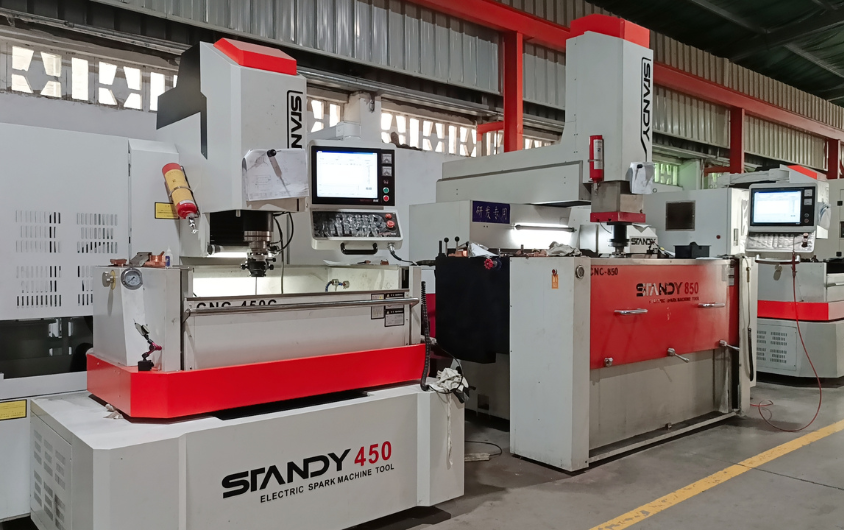
The efficiency of production equipment directly determines the cost of unit time. Jinen Plastic is equipped with 26 plastic injection molding machines and a full set of internationally advanced precision mold production equipment. Compared with traditional manual processing or low-efficiency small machines, these high-end injection molding equipments have three core advantages in cost control:
First, the automation degree is high. The equipment can realize continuous production for 24 hours, reducing the labor input in the processing link. Taking the production of sports equipment accessories as an example, the automated injection molding line only needs 2-3 operators to monitor, while the traditional manual processing requires 5-8 people for the same output, and the labor cost is reduced by more than 50%.
Second, the production cycle is short. The advanced injection molding machine can complete the entire process of mold clamping, injection, cooling and demolding in 30-60 seconds, while the traditional process takes 2-3 minutes. The production efficiency is increased by 2-3 times, and the unit time cost of each product is correspondingly reduced.
Third, the stability is strong. The equipment adopts precise temperature control and pressure control systems, which can avoid production shutdowns caused by equipment failures. The annual equipment utilization rate of Jinen Plastic reaches more than 95%, which is far higher than the industry average of 80%, and effectively reduces the cost loss caused by idle equipment.
2. Precision Molding Technology Improves Material Utilization
Material cost accounts for 40%-60% of the total cost of plastic products, so improving material utilization is the key to reducing costs. Jinen Plastic’s injection molding technology, supported by precision mold production capabilities, solves the problem of material waste in traditional processes from two aspects:
On the one hand, the precision of the mold is high. The company’s mold production equipment can process molds with a precision of 0.005mm, which ensures that the injection molded parts (such as ABS plastic parts and hardware plastic accessories) have no burrs or excess materials. The material scrap rate is controlled below 3%, while the scrap rate of traditional molds is usually 8%-12%. Taking 1000kg of raw materials as an example, Jinen Plastic can save 50-90kg of plastic raw materials, and the material cost is reduced by at least 5%.
On the other hand, the injection molding process is optimized. Through the adjustment of injection speed, pressure and temperature, the raw materials can be fully filled in the mold cavity, avoiding the phenomenon of insufficient filling or overfilling. At the same time, the company recycles and crushes the small amount of leftover materials generated in the production process, and reuses them after testing and proportioning, realizing the secondary utilization of materials and further reducing the material cost.
3. One-stop Service and Quality System Reduce Indirect Costs
In addition to direct costs such as labor, equipment and materials, indirect costs such as communication, rework and quality inspection also occupy a certain proportion of the total cost. Jinen Plastic’s “one-stop service from design to production” and ISO9001-2015 quality management system certification have effectively controlled these indirect costs:
For the one-stop service, the company can provide integrated solutions from product design, mold development to injection molding production. Customers do not need to cooperate with multiple suppliers (design company, mold factory, injection factory) separately, which shortens the project cycle by 30%-40% and reduces the communication cost and coordination cost caused by multi-party cooperation. For example, when a customer needs to develop a new type of sports equipment accessory, Jinen Plastic can complete the entire process from design drawing review to mass production in 20-30 days, while the traditional multi-party cooperation mode takes 40-50 days.
For the quality management system, the ISO9001-2015 certification covers the entire process of raw material inspection, production process monitoring and finished product testing. With the support of experienced technicians, the company can detect and solve quality problems in time, avoiding the rework cost caused by unqualified products. The qualified rate of Jinen Plastic’s finished products reaches more than 99.5%, and the rework cost is controlled below 0.5% of the total cost, which is far lower than the industry average of 2%-3%.
Conclusion
For manufacturers of plastic products, injection molding is not only a processing technology, but also a cost-saving tool that can be relied on. Jinen Plastic’s 16-year industry practice shows that through high-efficiency equipment, precision technology, one-stop service and strict quality management, injection molding can reduce the total production cost by 15%-25%, while ensuring product quality and production efficiency. In the future, with the continuous upgrading of injection molding technology, the cost-saving potential of this process will be further released, bringing more cost advantages to plastic product manufacturers.